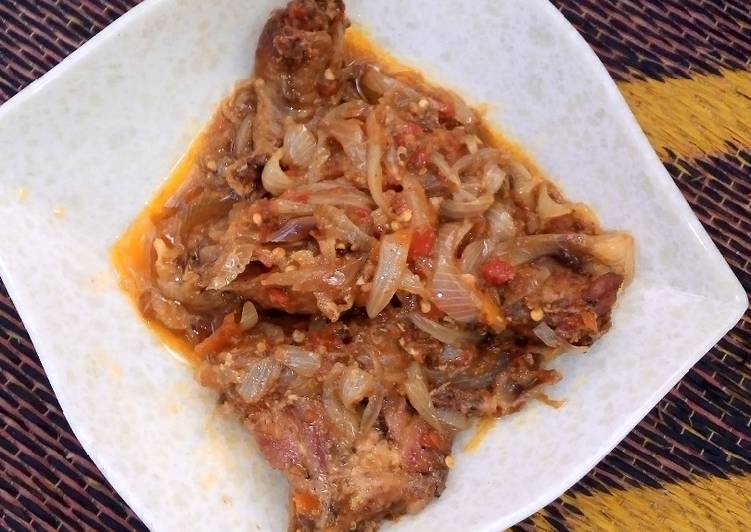
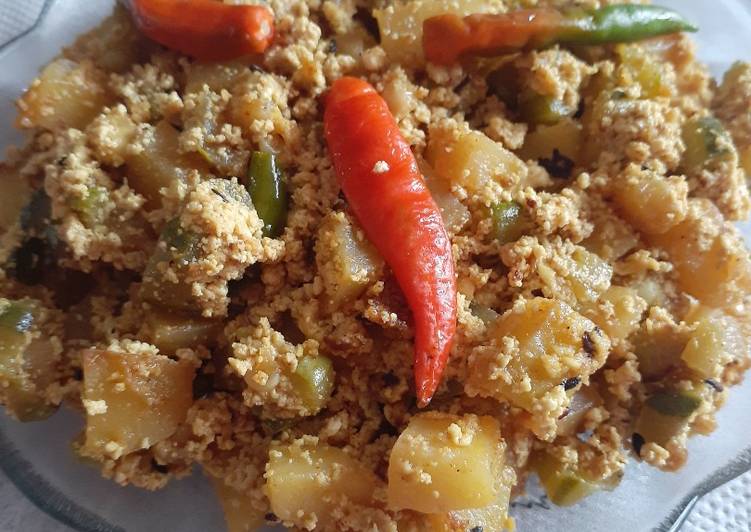
My grandmother always told me that Abacha is not a meal. Though it can be as filling as any other main course meal, African Salad is usually eaten as an in-between meal. Abacha and Ugba also known as African salad is a Cassava based dish from the Igbo tribe of Eastern Nigeria. Abacha is simply dried shredded Cassava while Ugba on the other hand is fermented.
Abacha(african salad) is one of the most well liked of recent trending meals on earth. It is enjoyed by millions daily. It’s easy, it’s fast, it tastes yummy. They are nice and they look wonderful. Abacha(african salad) is something which I’ve loved my whole life.
To begin with this recipe, we have to prepare a few ingredients. You can cook abacha(african salad) using 9 ingredients and 7 steps. Here is how you cook that.
The ingredients needed to make Abacha(african salad):
- Make ready 300 g Abacha (dried shredded cassava) 100g Ugba(Ukpaka)
- Get 200 ml Palm Oil 2 tablespoonful ground Crayfish
- Prepare 1 teaspoon ground Ehuru(calabash nutmeg)(optional)
- Make ready 1 level teaspoon ground Potash(akaun)
- Get 1 Stock cube/ powder(seasoning cube) 1 large or 2 small Onions
- Prepare to taste Chili Pepper/ any hot pepper (to taste) Salt
- Take 1 tablespoonful finely chopped Garden Egg leave.(You can use
- Get thinly sliced utazi leaves or spinach leaves as an alternative)
- Prepare Boiled Dried fish or Stockfish Kpomo or Kanda (cow skin)
There are many variations to the way this salad is made. Abacha is basically dried shredded cassava mixed with palm oil and other condiments. Today we are cooking the delicacy of the people of Enugu - a welcome dish called Abacha (African Salad). Abacha, which is also known as African salad, is a delicious Nigerian meal that is most popular among the Igbo people.
Instructions to make Abacha(african salad):
- First wash, season and cook the kpomo(slice the kpomo into tiny bits). b. Soak the dry prawns in hot water to soften them a bit and strain. c. If you haven,t done this yet, also cut the fresh fish and fry. Also shred the boiled dried fish / stock fish. Then set all aside for later use.
- Dissolve the ground akaun (potash) in about 3-4 tablespoonful of water and pass through a sieve to remove particles. Set the liquid aside for later use. e. Rinse the Ugba in lukewarm water, strain and set aside. f. Place the dry abacha in a bowl and soak in cold water for about 8 minutes until it goes from pure white color
- Another method is to pour hot boiling water over the dry abacha, stir well and leave to soak for 1-2 minutes. Then pour the abacha into a sieve and let the water strain.
- Slice one onion bulb into rings, and dice or pound the other onion bulb. Now for the preparation…. 1. Pour the palm oil into a clean dry pot, add the potash liquid and mix until the color begins to chage from orange to yellow and the mixture becomes a thick paste
- Add the crayfish, pepper, diced/pounded onions, the ground ehuru(calabash nutmeg), ogiri and stock bube, mix thoroughly until well combined. 3. Now, place the pot on low heat, add the strained abacha and adjust for salt if neccessary. Mix well and put off the heat as soon as the abacha is warmed up. Tip: don't leave the abacha for too long on heat, or you'll end up with ''Abacha pottage'' :)
- You can choose to serve the meal as it is, along with the accompaniments, but if you choose to go further and mix it all in one pot. 4. Then, add the ugba(ukpaka),chopped garden eggs, the cooked dried/stock fish(if using), softened large prawns, and the kpomo. Mix well until all the ingredients are well blended.
- Finally, add the sliced leaves, stir well and transfer to a serving plate. Garnish the prepared Abacha ncha (African salad), with the onion rings and fried fish…Enjoy!
Today we are cooking the delicacy of the people of Enugu - a welcome dish called Abacha (African Salad). Abacha, which is also known as African salad, is a delicious Nigerian meal that is most popular among the Igbo people. PagesBusinessesFood & drinkRestaurantFast Food RestaurantAbacha - African salad in UAE. Ingredients used in making abacha or African salad vary from person to person. How to prepare African salad (abacha) ( ) Abacha is prepared with cassava.
This means that at any given abacha(african salad) time in your cooking cycle cycles there is quite probably some one somewhere that’s better and/or worse at cooking more than you personally. Take advantage of this as the very best have bad days in terms of cooking. There are lots of people who cook for different reasons. Some cook in order to consume and survive although some cook simply because they actually enjoy the process of cooking. Some cook during times of emotional trauma among many others cook out of utter boredom. Whatever your reason for cooking or understanding how to cook you should begin with the basics.
First thing which you have to learn is the different terminology you’ll discover in recipes actually means. There are many fresh and at times foreign sounding terms you may find in recipes that are common. These terms may mean that the difference in recipe success or failure. You need to be able to come across a good section in virtually any inclusive cookbook that explains different definitions for unfamiliar terminology. If you aren’t entirely certain what’s meant with"folding at the eggs" it really is in your interests to check this up.
You will also discover as your own experience and confidence grows that you will find yourself increasingly more regularly improvising as you go and adjusting recipes to meet your personal preferences. If you’d like more or less of ingredients or would like to earn a recipe somewhat more or less hot in flavor you can make simple alterations along the way to be able to achieve this goal. In other words you will begin in time to create meals of your personal. And that is something that you won’t necessarily learn when it has to do with basic cooking skills for beginners but you’d never know if you did not master those simple cooking abilities.